
Brands have more ways to create visual content than ever before. AI-generated imagery has dramatically expanded what creative teams can do, making it possible to explore concepts, develop creative directions and produce visual variations quickly.
But as generated imagery becomes increasingly common, brands should ask an important question: What is this image asking the audience to believe?
Not every image serves the same purpose. Some images express an idea. Others document reality. Understanding that difference is becoming an important part of brand management.
Invention and evidence serve different purposes
AI is powerful because it allows us to visualize something that doesn’t necessarily exist. Brands can illustrate abstract ideas, imagine future environments, explore campaign concepts or create imagery that would be difficult or expensive to photograph.
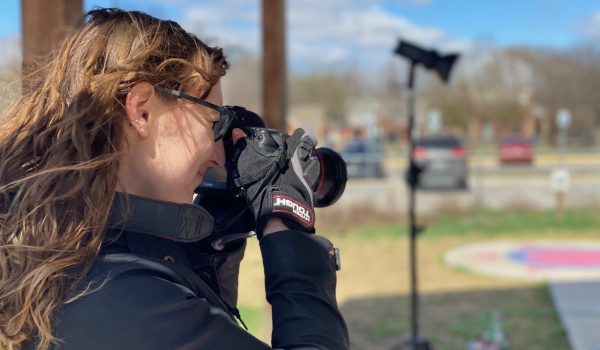
Professional photography serves a different purpose: it can provide evidence.
A photograph of your manufacturing floor shows the operation you actually built. A photograph of your employees introduces the people customers may actually work with. Images of products, facilities and completed projects document what your organization can genuinely claim as its own.
The question isn’t whether AI or photography is better. It’s whether the purpose of the image is to imagine something or substantiate something.
When an image becomes a brand claim
Visuals often communicate more than what is written on the page.
A potential customer may be looking at your website and wondering: Who are the people behind this company? What does the facility actually look like? Does this organization really have the capabilities it describes? Have they actually done the work they’re showing me?
If an AI-generated image appears to depict a company’s employees, facilities, products or completed work when it doesn’t, the issue isn’t simply whether the image looks realistic. It may unintentionally make a claim about the business that isn’t true.
That suggests a useful principle:
The closer an image gets to making a factual claim about your organization, the stronger the case for authentic source material.
Brands need an AI visual policy, not an AI prohibition
Avoiding AI isn’t the answer. Using it intentionally is.
A practical visual policy can separate content into three categories:
- Documentary: Employees, executives, customers, facilities, events, products and completed projects. Professional photography should generally provide the source of truth.
- Conceptual: Abstract ideas, future scenarios, campaign themes and creative storytelling. AI can be an excellent tool.
- Hybrid: Authentic brand assets that are extended, adapted or transformed using AI and other creative tools.
This gives marketing teams a framework for deciding not simply whether AI can create an image, but whether it should create that particular image.
The strongest workflow may use both
AI and professional photography don’t need to occupy separate creative worlds.
AI can help teams explore concepts, compositions, environments and campaign directions before production. Those ideas can inform the shot list and professional photoshoot.
Photography then creates original source material connected to the actual brand. AI can re-enter the process afterward to explore variations, extend backgrounds, adapt formats and develop additional campaign applications.
Think of the workflow as:
Imagine → Capture → Extend
AI helps imagine the possibilities.
Photography captures what is real.
AI and other creative tools help extend those authentic assets across more applications.
Your photography library is brand infrastructure
This also changes how businesses should think about a professional photoshoot.
Rather than producing a handful of images for one campaign or website update, a well-planned shoot can create a proprietary visual library of leadership, employees, environments, products, processes, culture and completed work.
Those assets can support websites, social media, proposals, recruiting, presentations, advertising—and future AI-assisted creative development.
In other words, professional photography isn’t simply content production. It becomes visual brand infrastructure.
And that infrastructure becomes more valuable as image generation gets easier.
Your competitors can generate an impressive office. They can’t photograph your office.
They can generate a convincing team. They can’t document your team.
They can create an imagined success story. They can’t photograph the work you actually delivered.
AI gives brands an extraordinary capacity to imagine. Professional photography gives them something equally important: a visual record of what is actually true.
The strongest visual strategies will know when the brand needs one, when it needs the other, and when combining both creates something more powerful than either can accomplish alone.
Ready to build a visual library that captures what only your brand can show? Talk with Laguna Media Group about creating authentic photography and an AI-enabled visual workflow designed around your brand.